Church Video Conferencing Platform: Own Your Ministry's Digital Space (2026)
Table of Contents
- Why Churches Need Their Own Video Platform
- The Community, Brand, and Privacy Case for Ownership
- Church Video Conferencing Use Cases
- Platform Options for Churches
- Cost Comparison on Church Budgets
- Building Online Community Through Branded Video
- Frequently Asked Questions
- Key Takeaways
Why Churches Need Their Own Video Platform
More than 60 percent of U.S. churches now offer some form of online worship or digital ministry, according to a 2025 Lifeway Research survey --- yet the vast majority rely on platforms they do not own or control. They stream on Facebook Live, host Bible studies on Zoom, and run youth groups through Google Meet. The tools work. The problem is what churches give up in exchange: their identity, their congregation's data, and their ability to create a digital space that feels like their ministry rather than someone else's product.
The pandemic forced churches online almost overnight. Most grabbed whatever free tool was available and never looked back. Five years later, many churches have built their entire digital ministry infrastructure on platforms designed for corporate meetings, social media engagement, or general entertainment. These platforms were not built for ministry. They were built for shareholders. The incentives are fundamentally different.
When a church runs its services on Facebook Live, Facebook decides what ads appear, what content gets recommended next, and how the algorithm surfaces or suppresses the stream. When a church hosts pastoral counseling on Zoom, Zoom's terms of service govern what happens with the data. When a youth pastor runs a teen Bible study on Google Meet, Google's ecosystem wraps around the experience. None of these companies are hostile to churches. They simply do not serve churches. They serve their own business models, and churches are one small use case among millions.
A church video conferencing platform that belongs to the church changes everything. The ministry controls the experience from the moment a congregant clicks the link. No third-party branding. No competing content. No algorithmic interference. No terms of service that shift without notice. The digital space feels like an extension of the church itself --- because it is.
This is not a luxury technology decision. For churches that take digital ministry seriously, platform ownership is a stewardship decision. It is about being faithful custodians of the community, the brand, and the trust that congregants place in their church every time they log on.
The Community, Brand, and Privacy Case for Ownership
Three forces make the case for churches owning their video platform: the need to preserve authentic community, the importance of consistent ministry branding, and the growing concern about congregation privacy.
Community Feel
Church is not a webinar. It is a gathering. The digital experience should feel like walking into a familiar sanctuary, not logging into a corporate meeting room. When congregants join a video call and see "Zoom Meeting" in the header, a generic blue interface, and a toolbar designed for enterprise productivity, the emotional context shifts. They are in a software product, not a place of worship.
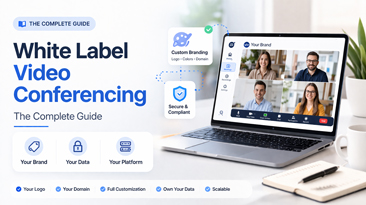
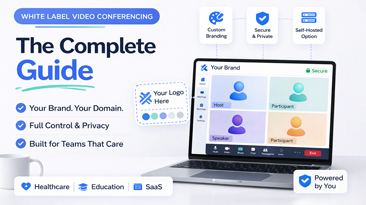
A branded church video conferencing platform can display the church name, logo, colors, and even a welcome message. The waiting room can feel like a foyer. The interface can reflect the warmth and identity of the congregation. These are not superficial concerns. Research in digital community formation consistently shows that environmental cues --- including visual design --- significantly affect how people perceive and engage with online groups. A church that looks like itself online will feel like itself online.
Ministry Brand
Churches invest heavily in physical space. The sanctuary, signage, bulletins, website, and social media all communicate who the church is and what it stands for. Yet many churches hand their most interactive digital experience --- live video --- to a third-party platform with zero brand alignment.
Every time a congregant opens Facebook to join a live service, they pass through a feed of political arguments, advertisements, and unrelated content before reaching the stream. That context bleeds into the experience. A dedicated church video conferencing platform eliminates the noise. The only brand present is the church's brand. The only content is the church's content.
For churches with multiple campuses, church plants, or partner ministries, branded video also creates consistency. Every location, every ministry arm, every small group connects through the same platform with the same look and feel. This builds institutional identity and reinforces that the scattered parts are one body.
Congregation Privacy
This may be the most urgent concern. Churches handle deeply sensitive information during video interactions. Pastoral counseling sessions involve confessions, family crises, mental health struggles, and marital problems. Prayer request calls include medical details and personal hardships. Support groups for addiction recovery, grief, and abuse operate on total confidentiality. Youth ministry video calls involve minors.
When these interactions happen on consumer platforms, the church has limited visibility into how data is handled. Zoom's privacy policy allows data collection for product improvement. Facebook's data practices are well documented and have drawn regulatory action globally. Google integrates user data across its entire product ecosystem.
A self-hosted church video conferencing platform keeps all data on infrastructure the church controls. No third party sees the participant lists, chat logs, recording files, or metadata. For pastoral counseling, this is not just preferable --- it may be ethically required. Congregants who share their deepest struggles in confidence deserve to know that a technology company is not sitting in the room.
Church Video Conferencing Use Cases
Ministry is diverse, and video conferencing supports virtually every dimension of church life. Each use case has distinct requirements that generic platforms address partially at best.
Worship Services and Sunday Streaming
The primary use case is live-streaming or simulcasting worship services for remote congregants, homebound members, travelers, and overflow audiences. Requirements include reliable high-definition video, audio quality good enough for worship music, the ability to handle hundreds of simultaneous viewers, and screen sharing for lyrics, announcements, and sermon slides.
A branded platform ensures the streaming experience matches the in-person experience visually. The church's identity wraps around the content rather than being subordinated to a third-party interface.
Bible Study and Small Groups
Small groups are the relational backbone of most churches. Bible studies, book clubs, discipleship groups, and fellowship circles all translate well to video. These sessions are interactive --- participants discuss, ask questions, and share reflections. They need breakout room capability for sub-groups, screen sharing for study materials, and a comfortable environment that encourages participation.
Groups of 8 to 15 people meeting weekly build deep relationships over time. The platform they use becomes part of the rhythm. When that platform is branded to the church, it reinforces belonging. When it is Zoom, it reinforces that they are borrowing someone else's space.
Youth and Children's Ministry
Youth ministry on video introduces a critical requirement: child safety. Churches have a duty of care when minors participate in video calls. This means controlling who can join, preventing uninvited access, ensuring recording policies are clear and enforced, and maintaining visible adult supervision.
Consumer platforms offer basic access controls, but a self-hosted platform gives the church full authority over security settings, participant verification, and recording storage. Youth pastors can configure the environment specifically for minor safety rather than relying on whatever default settings a consumer product provides.
Prayer Meetings and Prayer Chains
Prayer meetings range from small groups of 5 to large gatherings of 100 or more. They require stable audio, the ability to mute and unmute smoothly, and an atmosphere of reverence. Some churches run 24/7 prayer chains where participants rotate in and out of a continuous video room.
A dedicated platform allows the church to create persistent rooms that stay open, branded prayer environments with appropriate visual design, and access controls that ensure only verified church members participate.
Pastoral Counseling and Support Groups
This is the use case where privacy concerns are highest. Pastoral counseling sessions are confidential conversations that may involve disclosures of abuse, addiction, mental illness, marital infidelity, or suicidal ideation. Support groups --- grief recovery, divorce care, addiction recovery, trauma healing --- involve participants sharing vulnerabilities they would not share in any other context.
These interactions demand end-to-end encryption, zero third-party data access, controlled recording policies (many should explicitly not be recorded), and the ability to verify that only authorized participants are present. A self-hosted church video conferencing platform meets every one of these requirements because the church controls the entire technology stack.
Staff Meetings and Church Administration
Multi-site churches, churches with remote staff, and churches coordinating with mission partners need internal video conferencing for administrative purposes. Budget reviews, staff devotions, elder meetings, and strategic planning sessions all happen on video. Keeping these on the same branded platform as congregational activities simplifies technology management and reduces the number of tools the church pays for and supports.
Platform Options for Churches
Churches have more options than they may realize. Here is how the leading platforms compare when evaluated through the specific lens of ministry requirements.
1. WhiteLabelZoom
WhiteLabelZoom offers churches a fully branded, self-hosted video conferencing platform for a one-time purchase. No monthly fees, no per-user charges, no subscription that grows with the congregation. The church owns the platform outright.
The white-label capability means the church's name, logo, and colors appear throughout the interface. Congregants see their church, not a software vendor. The self-hosted model means all data --- recordings, chat logs, participant information --- stays on infrastructure the church controls. For counseling, youth ministry, and any interaction involving sensitive information, this is a decisive advantage.
Features include HD video and audio, screen sharing, breakout rooms, recording, webinar mode for large services, and persistent meeting rooms. The platform supports up to 1,000 participants in webinar mode and 200 in interactive meetings.
Best for: Churches that want full brand ownership, congregation privacy, and zero recurring costs.
2. Zoom
Zoom is the default choice for many churches because it is familiar. It works well, it is reliable, and most congregants already have the app installed. Zoom offers a discounted rate for nonprofits (including churches) through TechSoup --- approximately 50 percent off business plans.
The drawbacks are the ones that apply to every Zoom deployment: no custom branding, no data ownership, recurring monthly costs that scale with users, and dependence on Zoom's pricing decisions. Zoom has raised prices multiple times since 2020. For a church with 20 licensed hosts, the annual cost at nonprofit pricing is still roughly $2,700 to $5,400 depending on the plan tier. Over five years, that compounds to $13,500 to $27,000.
Best for: Churches that need an immediate, familiar solution and are comfortable with ongoing subscription costs.
3. Facebook Live
Facebook Live is free and reaches people where they already spend time. Many churches built large online audiences on Facebook during the pandemic. The zero cost is appealing for churches with minimal technology budgets.
The downsides are significant for ministry. The church does not control the environment --- ads, recommended content, and notifications compete for attention during the service. Comments sections are public and unmoderated by default. There is no privacy for participants (viewers are visible to each other). The platform is one-directional --- it is broadcasting, not gathering. And Facebook's algorithm determines who sees the stream, which means not all followers receive notifications.
Best for: Churches that want maximum public reach with zero cost and are comfortable with the advertising and privacy trade-offs.
4. YouTube Live
YouTube Live offers similar reach to Facebook with better video quality and archival capabilities. Recorded services are automatically available on the church's YouTube channel, creating a searchable library of content. YouTube's live chat is functional, and the platform handles large audiences well.
The limitations mirror Facebook's: no privacy, no interactivity beyond chat, third-party branding throughout, and algorithmic control over discoverability. YouTube may also place ads on church content once the channel meets certain thresholds, or even on content that does not meet thresholds if the church has not opted into the YouTube Partner Program.
Best for: Churches that prioritize sermon archiving and public discoverability over community interaction and privacy.
5. Church-Specific Platforms (Faithlife, Church Online Platform, Subsplash)
Several platforms are built specifically for churches. Faithlife offers integrated church management with video streaming. Church Online Platform (by Life.Church) provides a free online church experience with chat, prayer requests, and volunteer hosting. Subsplash combines a church app, giving, and streaming in one package.
These platforms understand ministry context, which is a genuine advantage. The trade-offs are typically cost (Subsplash and Faithlife charge monthly), limited video conferencing features (most focus on streaming rather than interactive meetings), and the same data ownership concerns as any cloud-hosted service. Few offer true two-way video for small groups or counseling.
Best for: Churches that want an all-in-one church management and streaming solution and prioritize ministry-specific features over video conferencing depth.
Cost Comparison on Church Budgets
Church budgets are funded by tithes, offerings, and donations --- money given in faith for the work of ministry. Every dollar spent on technology overhead is a dollar not spent on missions, outreach, benevolence, or staff. Cost discipline is not optional. It is a stewardship imperative.
Here is what the platforms actually cost for a typical midsize church with 10 host licenses over five years:
| Platform | Year 1 | Year 2 | Year 3 | Year 4 | Year 5 | 5-Year Total |
|---|---|---|---|---|---|---|
| WhiteLabelZoom (one-time) | $4,999 | $0 | $0 | $0 | $0 | $4,999 |
| Zoom Business (nonprofit) | $2,700 | $2,700 | $2,700 | $2,700 | $2,700 | $13,500 |
| Zoom Business (standard) | $5,400 | $5,400 | $5,400 | $5,400 | $5,400 | $27,000 |
| Subsplash (streaming + app) | $3,600 | $3,600 | $3,600 | $3,600 | $3,600 | $18,000 |
| Facebook Live | $0 | $0 | $0 | $0 | $0 | $0 |
| YouTube Live | $0 | $0 | $0 | $0 | $0 | $0 |
Facebook Live and YouTube Live are free but deliver only one-way broadcasting --- no interactive meetings, no small groups, no counseling sessions, no breakout rooms. They are supplements, not replacements, for a church video conferencing platform.
The $4,999 one-time investment in WhiteLabelZoom saves a church between $8,501 and $22,001 compared to subscription alternatives over five years. For a church operating on a $300,000 annual budget, those savings represent meaningful ministry capacity. That is a youth pastor's part-time salary. That is a mission trip. That is a year of benevolence fund distributions.
The financial case becomes even stronger when you factor in what subscription platforms do not provide: brand ownership, data control, and independence from vendor pricing decisions. Free platforms carry hidden costs in lost privacy, brand dilution, and the inability to conduct confidential ministry interactions.
Building Online Community Through Branded Video
A church is not a content channel. It is a community. The difference between broadcasting a sermon on YouTube and gathering a congregation on a branded platform is the difference between publishing and pastoring.
Online community does not happen automatically. It requires intentional design. A branded church video conferencing platform provides the tools for that intentionality.
Consistent environment. When every ministry touchpoint --- Sunday service, Wednesday Bible study, Friday youth group, Tuesday prayer meeting --- happens in the same branded space, congregants develop a sense of place. The digital campus becomes as familiar as the physical one. This consistency builds habit, and habit builds community.
Identity reinforcement. The church's visual identity appears in every interaction. This matters more than most church leaders realize. Branding is not vanity. It is identity. When a newcomer joins an online small group and sees the church's logo, colors, and name throughout the experience, they receive a constant signal: you belong here. When they see "Zoom Meeting," they receive a different signal: you are using a tool.
Member-only spaces. A self-hosted platform allows the church to create authenticated spaces where only verified members can enter. This is essential for community formation. People share more deeply when they know who is in the room. A members-only prayer group on a branded platform feels fundamentally different from a Zoom call with a shared link that anyone could forward.
Integrated communication. Branded platforms can link directly from the church's website and app. The transition from reading the church blog to joining a live service is seamless. There is no redirect to Facebook, no app-switching to Zoom, no cognitive break where the congregant leaves the church's digital ecosystem and enters someone else's.
Pastoral presence. When the senior pastor hosts a video call on the church's own platform, it carries symbolic weight. The pastor is inviting the congregation into the church's space, not into a rented room. This distinction may seem subtle, but pastoral leadership is built on presence, and presence is shaped by environment --- even digital environment.
Churches that invest in branded video conferencing report higher engagement in online ministries, stronger connection between in-person and online congregants, and greater willingness among members to participate in sensitive conversations like counseling and support groups. The platform itself becomes a ministry tool rather than a technology expense.
Frequently Asked Questions
Is a church video conferencing platform worth the investment for a small church?
Yes. Small churches often benefit more than large ones because their budgets are tighter and every dollar matters more. A one-time platform purchase eliminates a recurring expense line permanently. For a church of 50 to 150 members, the cost of a branded platform like WhiteLabelZoom is typically less than what the church would spend on Zoom over 18 to 24 months. Small churches also tend to have closer, more trust-dependent relationships, making privacy and branded community space even more valuable.
Can we live-stream worship services to hundreds of people?
WhiteLabelZoom supports up to 1,000 participants in webinar mode, which is designed for one-to-many broadcasting like worship services. Interactive meeting mode supports up to 200 participants for two-way video. Most churches use webinar mode for Sunday services and interactive mode for small groups, Bible studies, and prayer meetings.
How do we protect children during youth ministry video calls?
A self-hosted platform gives the church full control over access. You can require authentication so only verified participants can join, disable recording to protect minors, restrict screen sharing to leaders only, and ensure that at least two approved adults are present in every session. These protections are configurable at the church's discretion rather than dependent on a third party's default settings.
Do we need technical staff to run a self-hosted platform?
WhiteLabelZoom is designed for organizations without IT departments. Setup is guided, and ongoing maintenance is minimal. Most churches designate one staff member or volunteer to serve as the platform administrator, a role that requires no programming knowledge. The technical barrier is comparable to managing the church's website or social media accounts.
Can we use this for pastoral counseling and maintain confidentiality?
Absolutely. A self-hosted platform means all conversation data remains on infrastructure the church controls. No third party has access to video streams, chat messages, recordings, or participant metadata. For pastoral counseling, the church can disable recording entirely, require password-protected access, and limit sessions to two participants. This provides a level of confidentiality that cloud-hosted consumer platforms cannot match.
How does a branded platform compare to just using Facebook Live?
Facebook Live is a broadcasting tool. It sends video to an audience. A church video conferencing platform is a gathering tool. It brings people together for interaction. Facebook Live works for public sermon streaming but cannot host a Bible study, conduct counseling, facilitate a prayer meeting, or run a youth group. It also exposes congregants to advertising, algorithmic content, and public visibility. A branded platform does everything Facebook Live does (via webinar mode) plus everything it cannot do (via interactive mode), without any third-party interference.
Can we keep our YouTube channel and still use our own platform?
Yes. Many churches use a multi-channel approach. They stream the Sunday sermon publicly on YouTube for outreach and discoverability while using their branded platform for all interactive and private ministry activities. YouTube becomes the front door --- a place for seekers to find the church. The branded platform becomes the living room --- a place for the congregation to gather, connect, and grow together.
What happens if our internet connection drops during a live service?
Video conferencing reliability depends primarily on internet bandwidth, not the platform itself. A self-hosted solution gives the church control over server resources, which can be optimized for streaming performance. Best practice for churches is to use a dedicated internet connection for streaming (separate from the guest Wi-Fi), maintain at least 20 Mbps upload speed, and have a mobile hotspot as a backup. WhiteLabelZoom supports automatic reconnection, so brief interruptions do not end the session for participants.
Key Takeaways
-
Churches deserve a digital space that reflects their identity. Generic video tools designed for corporate meetings do not create the community feel that ministry requires. A branded church video conferencing platform makes the online experience an extension of the church itself.
-
Congregation privacy is a pastoral responsibility. Counseling, prayer, support groups, and youth ministry involve deeply sensitive interactions. A self-hosted platform keeps all data under the church's control, which is where it belongs.
-
Subscription costs compound against church budgets. Over five years, recurring video conferencing fees can cost a church $13,500 to $27,000. A one-time purchase eliminates that drain and redirects funds toward ministry.
-
Free platforms carry hidden costs. Facebook Live and YouTube Live are free to use but expose congregants to advertising, sacrifice brand identity, and provide no interactive ministry capability. They work for outreach but not for community.
-
Every ministry use case is better served by an owned platform. Worship services, Bible studies, youth groups, prayer meetings, counseling, and staff coordination all benefit from brand consistency, privacy controls, and the absence of third-party interference.
-
Owning your platform is a stewardship decision. The technology a church chooses reflects its values. Investing in a platform that protects the congregation, preserves the church's identity, and eliminates wasteful recurring costs is faithful stewardship of the resources God has entrusted to the church.